Want to drive a tractor-trailer but aren't sure where to start? The license is only one part of the job. Your age, medical status, driving history, tests, and endorsements all affect your path. Here are the key truck driver qualifications to check before you apply for CDL-A linehaul work.
1. CDL Jobs Inland Empire, A Direct Path After You Qualify
CDL Jobs Inland Empire connects qualified CDL-A drivers with a top-tier FedEx contractor in Southern California. It's best for drivers who want company work, drop-and-hook freight, weekly direct-deposit payroll, and a clear hiring path.
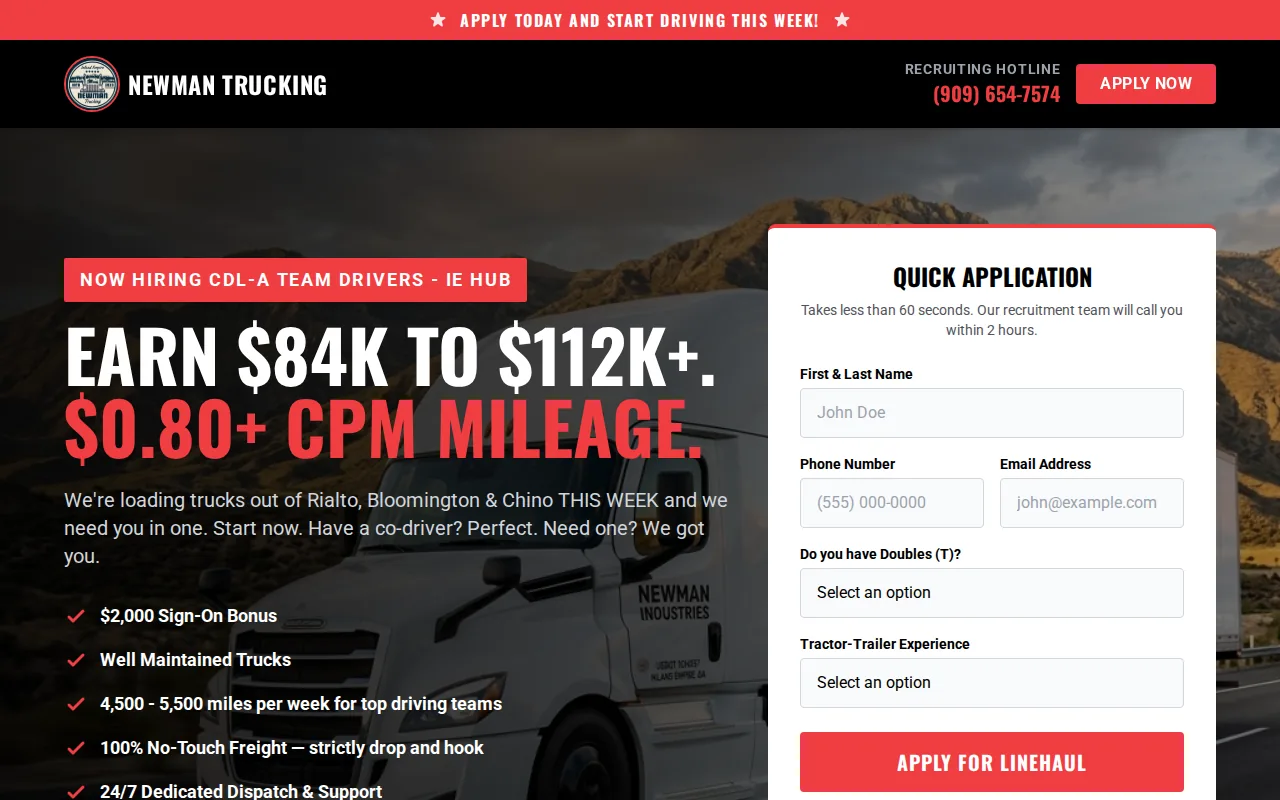
We look for drivers who can meet the basic license and screening rules, then bring a safe, steady work style to linehaul runs. Newly licensed drivers can also use this path when they need a quick hiring process after earning their CDL.
The work may suit you if you want stable income without buying a truck. You can focus on driving while the contractor manages the equipment and freight operation. Bonus incentives may also reward sign-on and safe performance, though exact eligibility depends on the job terms.
Home time, route details, and pay rules should be confirmed before you accept any offer. Those details can vary by assignment.
2. Class A CDL Qualification, The Standard for Tractor-Trailer Work
A Class A CDL is the main license for drivers who plan to pull large trailers. It covers combination vehicles where the truck and trailer meet federal weight rules.
Class A is the best fit for tractor-trailer linehaul work because it gives you the authority needed for common semi-truck combinations. Research across sampled driving roles found Class A was the most common stated license class. That supports a simple rule: if you want to pull a full-size freight trailer, plan on CDL-A.
Before the skills test, you'll usually need a Commercial Learner's Permit. The permit lets you practice with a qualified CDL holder. You must also complete required entry-level training through an approved provider before taking the skills test.
Check your state handbook before you enroll. Rules for permits, documents, fees, and test timing can vary.
For information about commercial driver training and safety requirements, consult the linked resource.
3. Age Eligibility, 18 for Intrastate and 21 for Interstate Driving
Age is one of the first truck driver qualifications to check. In general, you may pursue a CDL at 18 for driving within your home state. You generally need to be 21 to drive across state lines.
That distinction matters in the Inland Empire. A new 18-year-old driver may qualify for a state-only role but won't meet the age rule for interstate linehaul work. At 21, the interstate limit usually no longer blocks that career path.
You'll also need proof of identity, state residence, driving history, and other documents required by your licensing agency. Bring the correct paperwork to avoid a wasted appointment.
California has its own process. The state also requires a medical exam for CDL applicants and renews medical certification on a two-year cycle in the normal case.
4. CDL Training Programs, Build Skills Before Testing
CDL training programs help you learn the skills behind the license. They're best for new drivers who need supervised practice before handling a tractor-trailer alone.
Look for a program that covers classroom rules and hands-on control. You should practice steering, backing, coupling, mirror use, braking, and trailer tracking. A good course also makes you repeat the pre-trip inspection until the sequence feels natural.
Ask each school these questions before paying:
- Is the provider approved for required entry-level training?
- Does the course prepare you for the exact vehicle used in testing?
- How much time is spent behind the wheel?
- What happens if you fail a test?
- Are tuition terms or work commitments written clearly?
Training length can range from a few weeks to much longer programs. The right choice depends on your schedule, budget, and need for extra practice. Don't choose a school only because it promises the fastest license.
5. Knowledge and Skills Tests, Prove You Can Operate Safely
The CDL tests check both what you know and what you can do. These truck driver qualifications include written knowledge exams plus a hands-on skills test.
The knowledge test covers subjects such as traffic rules, safe vehicle operation, inspections, and commercial driving laws. Study the handbook issued by the state where you'll test. State manuals may differ in small but important ways.
The skills test usually has three parts:
- Vehicle inspection: You point out safety parts and explain what you inspect.
- Basic control: You show control through backing and other set maneuvers.
- Road test: You drive in traffic while showing safe judgment and control.
California's road test requires attention to signs, signals, seat belt use, traffic laws, and safe vehicle control. A moving violation or crash can end the test.
Practice the inspection out loud. During the test, silence can make a step look missed even when you know the part.
6. DOT Medical Qualification, Meet Federal Fitness Standards
A DOT medical exam confirms that you can safely perform commercial driving duties. It's a core qualification for CDL work, not a box to handle after hiring.
The examiner reviews health factors that may affect alertness, movement, vision, hearing, or safe control. Bring a list of medicines and any records your examiner may need. Be honest. A hidden issue can delay your start later.
Interstate drivers generally need an exam from a qualified medical examiner. Intrastate rules can differ by state. California says CDL applicants must provide proof of a medical exam and typically renew it every two years.
Medical certification can also affect your license status if it expires. Track the date yourself. Don't wait for an employer or agency reminder.
A published review indexed by PubMed on commercial motor vehicle drivers also shows why fitness and fatigue concerns belong in the hiring conversation. Safe driving depends on your condition before the shift begins.
7. Clean Screening Profile, Background, Driving Record, and Drug Test
Employers review more than your CDL card. A complete screening profile may include your motor vehicle record, work history, background check, medical qualification, and pre-employment drug test.
Your driving record gives a recruiter a view of past choices. Major violations, license suspensions, repeated crashes, or a pattern of unsafe driving can affect approval. A single old issue may not tell the whole story, so keep clear documents ready.
Drug testing is handled under federal rules for DOT-regulated work. Never assume that legal use under state law is allowed for a regulated driving job. The employer's policy may also be stricter than the legal minimum.
Before you apply, prepare:
- Your current CDL and medical card details.
- A complete employment history with accurate dates.
- Addresses and license information requested by the recruiter.
- A truthful explanation for any record issue.
Don't hide a problem. A clear explanation gives a hiring team something to review. A surprise found during screening can stop the process.
8. CDL Endorsements, Add HAZMAT, Tanker, or Doubles Options
Endorsements add permission for certain cargo or trailer types. They're best for drivers who want more job choices later, but you don't need every endorsement for every linehaul role.
Common options include HAZMAT, tanker, and doubles or triples. Each may require an extra knowledge test. HAZMAT work can also require a separate security review. Check the exact state and job rules before you pay for an endorsement.
UPS listings were the only sampled roles that explicitly required all three of these endorsements: HAZMAT, doubles or triples, and tanker. That doesn't mean every carrier uses the same rule. It means you should ask instead of assuming.
For a FedEx contractor role, ask which endorsements are required before you add them. Extra credentials take time and may add cost. They make sense when they match the freight you want to haul.
9. Team Driver Qualification, Share the Work and Maximize Road Time
Team driving pairs two qualified drivers in one truck. It's best for people who can share a small space, follow a shift plan, and communicate without drama.
One driver can rest while the other drives, subject to hours-of-service rules. That can keep the truck moving while each driver gets a proper break. Teams may cover more road miles than a solo driver, which is why linehaul operations often use them.
Team work also fits drivers who prefer drop-and-hook freight. The trailer is exchanged rather than unloaded by the driving team in many such operations. That can reduce physical handling during a long run.
Still, team driving isn't for everyone. Sleep quality, privacy, schedule control, and conflict can become daily issues. Discuss shift timing, home time, and partner expectations before you commit.
Safety comes first. A tired teammate should say so early, not after the truck is moving.
10. Career-Ready Driver Qualification, Choose Company Work Over Ownership
Company driving is often the cleaner first career path after you qualify. It's best for drivers who want to focus on the road instead of truck finance, maintenance bills, permits, and customer hunting.
As an owner-operator, you carry more business risk. A repair can stop revenue while the bill keeps growing. You also need to manage records, insurance, fuel choices, and load decisions.
With company work, the contractor supplies the truck and sets the freight plan. You still need to protect your license through safe habits. But your daily job stays closer to driving and delivery performance.
At CDL Jobs Inland Empire, we connect CDL-A drivers with FedEx contractor linehaul work in the Inland Empire. Drivers may receive weekly direct-deposit payroll plus bonus opportunities tied to the role. Review home-time expectations and all pay terms before accepting.
If you want a simple start, company linehaul work is usually the better first move. You can learn the operation before deciding whether business ownership fits later.
Qualification Comparison Table, Match Your Profile to the Right CDL Path
The right path depends on your age, license, experience, and work goals. Use this table to spot the main gap before you apply.
| Driver path | Best fit | Main qualification focus | Watch before applying |
|---|---|---|---|
| CDL-A linehaul driver | Tractor-trailer freight | Class A CDL, medical qualification, testing | Confirm interstate age and route rules |
| New CDL-A driver | First company driving role | Training, permit, skills test, clean screening | Ask about orientation and mentoring |
| Team driver | Shared long-distance runs | CDL-A plus safe shift coordination | Discuss sleep, partner fit, and home time |
| Endorsement-focused driver | Specialized freight | Extra tests and possible security review | Get the job requirement in writing |
| Owner-operator | Independent business control | CDL plus business and equipment planning | Budget for repairs and slow periods |
One detail deserves extra attention: home time. In the sampled research, only one listed role clearly disclosed daily home time. Ask about it directly. A job can look good on paper and still fail your needs if the schedule keeps you away too long.
FAQ
What are the main truck driver qualifications?
The main truck driver qualifications are a valid CDL, the correct class for your vehicle, required training, knowledge and skills tests, medical certification, and employer screening. Your age and driving record also matter. For tractor-trailer linehaul work, CDL-A is usually the right license. Endorsements depend on the freight and employer.
Can you get a CDL at 18?
Yes, you can generally get a CDL at 18 for intrastate driving, but interstate work usually requires age 21. State rules may add conditions. If your goal is linehaul work that crosses state borders, confirm the age requirement before you spend money on training.
Do you need a DOT physical for a CDL?
Yes, most commercial drivers need a DOT medical exam and proof of medical qualification. Interstate drivers generally use a medical examiner listed in the federal registry. Medical certification often renews every two years, though your examiner may set a shorter period.
What tests are required for a Class A CDL?
A Class A CDL normally requires knowledge exams plus a skills test. The skills test covers a vehicle inspection, basic control maneuvers, and a road test. Study your state handbook and practice with the same type of combination vehicle used for testing.
Do CDL drivers need endorsements?
CDL drivers need endorsements only when the job or vehicle calls for them. HAZMAT, tanker, and doubles or triples endorsements can expand your options. Each may require an extra written test, and HAZMAT work can involve an added security review. Ask the employer which credentials are required.
Is company driving better than being an owner-operator?
Company driving is often better for a new CDL-A driver who wants less business risk. The contractor supplies the truck and manages core operating costs, while you focus on safe driving. Owner-operators gain more control but must handle equipment, repairs, permits, insurance, and cash flow.
Start by checking your age, medical status, driving record, and CDL plan. If you want company linehaul work in Southern California, review the current opportunities at CDL Jobs Inland Empire and apply once your documents are ready.