FedEx linehaul drivers in the Inland Empire often see a low $0.86‑per‑mile split, yet flat‑rate contracts push earnings to about $3 per mile. Want to know exactly what you’ll take home each week? Follow these five steps, add the right bonuses, and see if a contractor like CDL Jobs Inland Empire fits your goals.
Step 1: Determine Your Base Mileage Rate
The first number you need is the per‑mile split. For team drivers who home weekly, FedEx lists a .86 $/mile rate. That figure appears in local job postings for Inland Empire linehaul work. The carrier uses mileage splits alongside flat weekly pay.
Note that the split only applies when you qualify as a team driver. If you’re not on a team, your base mileage earnings will be smaller, so you’ll rely more on flat‑rate pay and bonuses.
By the end of this step you should know the exact cents per mile that apply to your contract.
Step 2: Calculate Total Weekly Miles on Your Route
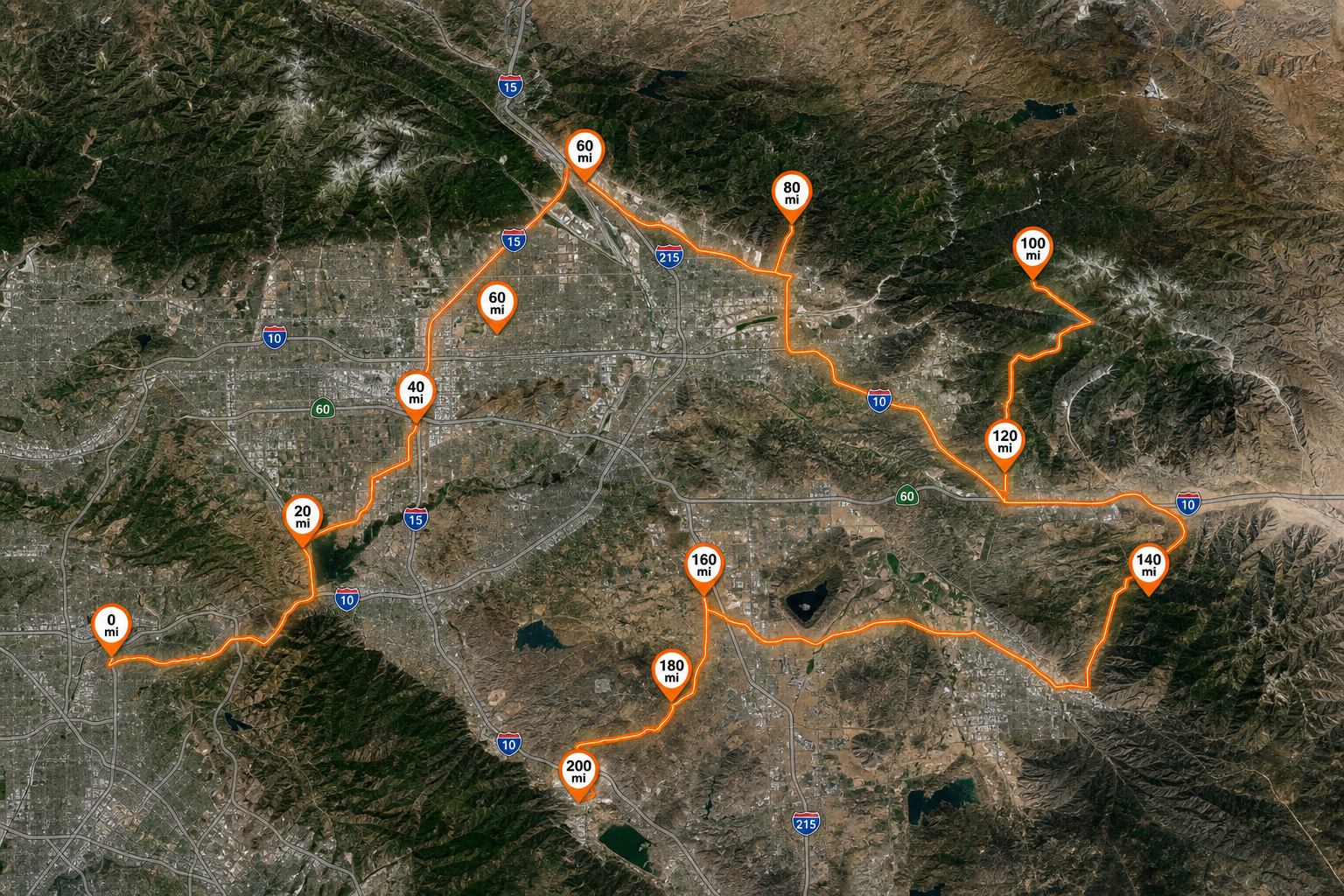
FedEx linehaul routes in the Inland Empire typically run 419 miles each day. Drivers work five days a week, so total weekly mileage lands between 2,095 and 2,095 miles. Some contractors add extra miles for deadhead trips, mileage that isn’t paid but still counts toward wear and tear.
To get your weekly miles, multiply the daily distance by the number of work days. If you’re on a 6‑day schedule, add that extra day’s mileage. Remember that deadhead miles are deducted from pay.
Here’s a quick calc you can copy into a spreadsheet:
- Daily miles = 419
- Work days = 5 (or 6)
- Total weekly miles = Daily miles × Work days
Plug in your schedule and you’ll have the mileage base for the next steps.
Step 3: Add Supplemental Pay and Bonuses
Flat‑rate pay isn’t the whole story. Contractors often tack on extra dollars for low‑mile runs, Medline spot work, and seasonal performance bonuses.
Low‑mile supplemental pay can be $340 per day when you’re assigned a short run. Medline spot work adds a fixed $65.40 for a 40‑minute task. Both items are listed in driver forums that track FedEx linehaul compensation.
Seasonal bonuses run from October to December and are based on on‑time delivery metrics. The exact amount varies, but they can boost a weekly total by a few hundred dollars.
Below is a simple table you can use to sum these items. Fill in the days you work each type of extra pay.
| Pay Type | Rate | Days per Week | Weekly Total |
|---|---|---|---|
| Low‑mile supplemental | $340 | 2 | $680 |
| Medline spot | $65.40 | 3 | $196.20 |
| Performance bonus (Oct‑Dec) | Varies | – | Varies |
We also need to consider that drop‑and‑hook tasks earn no pay, so any time spent on those should be subtracted from your available work hours.
Step 4: Calculate Your Estimated Weekly Take‑Home Pay
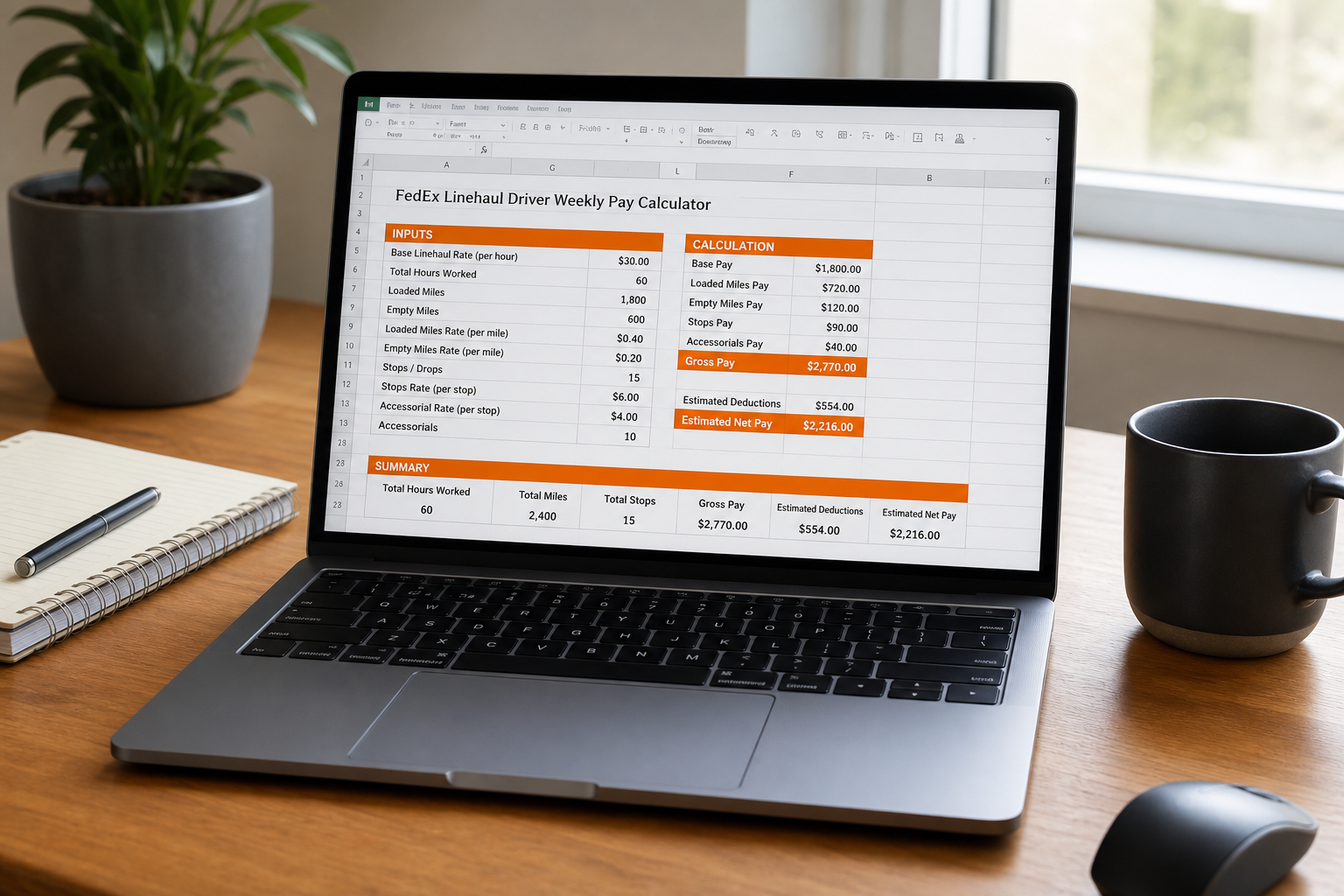
Now put the pieces together. Start with the base weekly flat rate of $1,350‑$1,450 for a 419‑mile daily run. Multiply the per‑mile split by your total weekly miles, then add any supplemental earnings you logged.
Example calculation:
- Base weekly pay: around $1,350‑$1,450 (average range)
- Total weekly miles: varies by route
- Mileage earnings: based on total weekly miles multiplied by the $0.86 per mile split rate
- Supplemental pay: varies based on additional earnings such as Medline spot pay and performance bonuses
- Estimated gross weekly pay: sum of base pay, mileage earnings, and supplemental pay
From that gross amount, payroll taxes and any overtime rules apply. Overtime regulations may vary by jurisdiction.
After taxes and deductions, your net take‑home pay will be lower. Use the figures above to estimate your gross earnings.
Step 5: Evaluate Contractor Opportunities – Choose CDL Jobs Inland Empire
If the numbers look good, the next decision is where to sign on. CDL Jobs Inland Empire connects drivers with a top‑tier FedEx contractor that offers stable linehaul work, weekly direct‑deposit payroll, and sign‑on bonuses for team drivers.
Why pick this partner? First, they guarantee the 419‑mile daily route that fuels the $1,350‑$1,450 base pay. Second, they provide the supplemental low‑mile pay and Medline spot opportunities that we added in Step 3. Third, they handle overtime compliance and payroll taxes, so you get a clean take‑home check.
Signing up takes less than 60 seconds. Just visit CDL Jobs Inland Empire, fill out the short form, and a recruiter will call you within 24 hours.
By now you should have a clear picture of your potential earnings and a trusted contractor to start driving.
Frequently Asked Questions
How do I know my exact per‑mile rate?
The per‑mile rate depends on your driver status. Team drivers who home weekly get the .86 $/mile split; for solo drivers, check your contract for your exact rate. Check your contract or ask your recruiter for the exact figure.
Can I work more than five days a week?
Yes. Adding a sixth day adds another 419 miles and another day’s base pay, but overtime rules may apply if you exceed 40 hours in a week.
What happens to deadhead miles?
Deadhead miles are not paid and are treated as a deduction from your mileage earnings.
Are there any hidden fees?
Most contractors charge no hidden fees. The main cost to watch is overtime tax if you exceed 40 hours in a week.
How often are bonuses paid?
Performance bonuses are awarded quarterly, with a larger seasonal boost from October to December. Yearly service bonuses arrive after a full year of continuous service.
Is the calculator accurate for all routes?
The guide uses the typical 419‑mile daily route for the Inland Empire. If your route differs, adjust the daily mileage in the spreadsheet and recalculate using the same steps.
Conclusion
Use this step‑by‑step method to see exactly how much you can earn as a FedEx linehaul driver in the Inland Empire, then partner with CDL Jobs Inland Empire for a fast‑track hiring process and reliable weekly pay.