You've heard truckers talk about "dropping and hooking" and maybe pictured something like swapping trailers at a truck stop. It's simpler than you think. Drop and hook is the fastest way to move freight: you leave one trailer and pick up another, usually in under 30 minutes. Let's walk through what it is, how it works, and why it matters for drivers and the industry.
What Is Drop and Hook Trucking?
Drop and hook trucking means a driver drops off a loaded or empty trailer at a yard and immediately hooks up another trailer that's ready to go. The driver never waits for loading or unloading. The trailer is pre-loaded by the shipper or yard crew, so the driver just swaps trailers and rolls out.
This method can save drivers a couple of hours at each stop. For FedEx linehaul operations, those saved hours add up to more miles and higher pay. Think of it like a relay race: the freight is passed from one trailer to another, and the driver is just the baton carrier.
Drop and hook is common at distribution centers, warehouses, and rail yards. Large fleets use it because they own many trailers and can stage them. At CDL Jobs Inland Empire, we one of efficient linehaul runs, drivers can get in and out fast, keep moving, and earn more per week.
How the Drop and Hook Process Works
The process breaks down into two parts: dropping your current trailer and hooking to the next one. Here's the step-by-step.
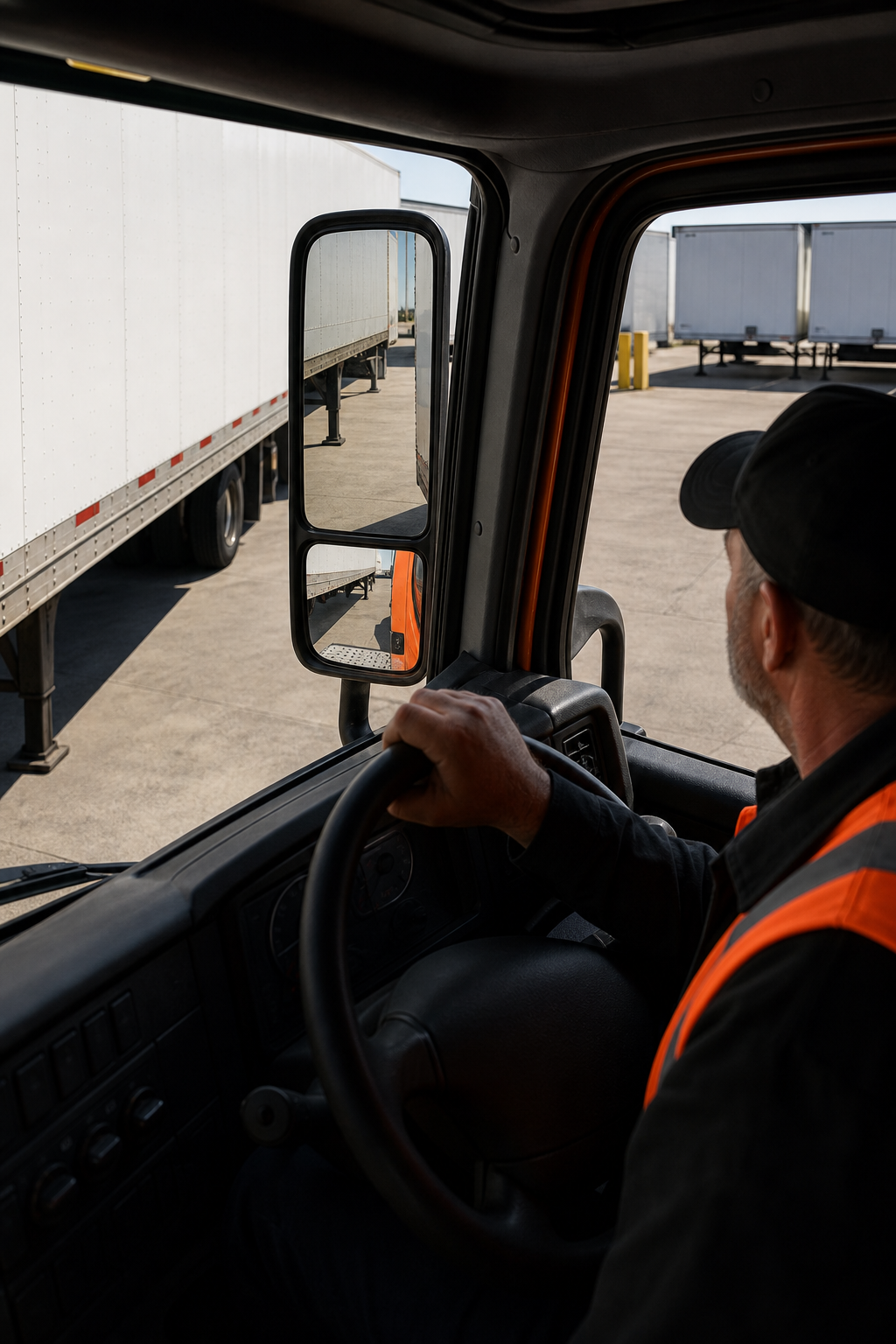
Dropping the Trailer
- Position the trailer on level, solid ground. Set the brakes.
- Lower the landing gear until the pads just touch the ground. Do not lift the trailer off the fifth wheel.
- Disconnect the glad hands (air lines) and the electrical pigtail. Stow them in the cab or cradle, never leave them dangling on the catwalk.
- Release the fifth wheel locking handle.
- Pull the tractor forward slowly. Once the fifth wheel clears the trailer, stop and set the parking brake.
- Do a final walk-around to make sure the trailer is stable on its landing gear.
Hooking to the Next Trailer
- Inspect the new trailer: check the kingpin, upper coupler plate, and tire condition.
- Back under the trailer until the fifth wheel engages. You'll hear a clunk and the handle will lock.
- Do a tug test, pull forward gently to confirm the lock is secure.
- Connect the glad hands and electrical line. Listen for air leaks. If you hear hissing, the seal isn't right, reconnect.
- Raise the landing gear fully and stow the crank handle.
- Release the parking brakes, do a full pre-trip, and roll out.
Learning these steps shaves minutes off each cycle. Over a week, that's extra miles and fewer detention headaches. For FedEx linehaul drivers working with CDL Jobs Inland Empire, efficiency like this means stable weekly pay without unpaid waiting time.
Drop and Hook vs. Live Load: Key Differences
Live loading means the driver waits while the trailer is loaded or unloaded. The truck backs into a dock, and the driver sits until the work is done. That can take one to three hours, no miles, no pay (unless detention fees kick in).
Drop and hook flips that. The driver trades a trailer, not time. Here's a quick comparison:
| Factor | Drop and Hook | Live Load |
|---|---|---|
| Driver wait time | None (swap only) | 1-3 hours average |
| Pay impact | More miles per week | Less miles, detention possible |
| Yard space needed | Large lot to stage trailers | Dock doors only |
| Driver skill | Couple/uncouple routine | Backing into dock |
| Best for | Large fleets, linehaul | Small shippers, tight yards |
Most FedEx linehaul work at CDL Jobs Inland Empire is drop and hook. Drivers appreciate the faster turnaround and the ability to run more miles per week.
Safety and Best Practices for Drop and Hook
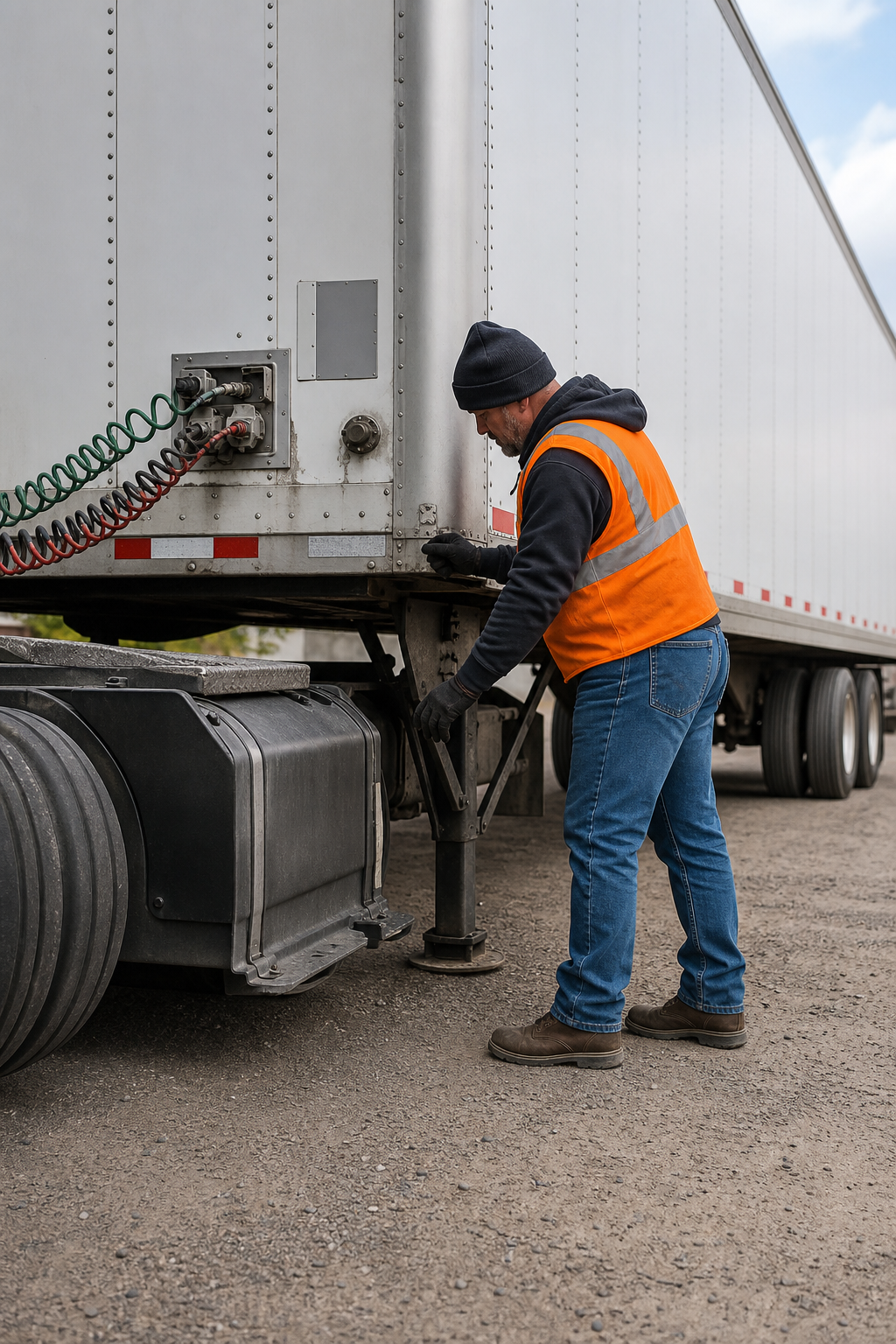
Accidents happen when drivers rush. Follow these safety tips every time:
- Check the ground. Always park on firm, level ground. Soft dirt or gravel can sink the landing gear.
- Use three-point contact. When climbing in or out of the cab, keep two hands and one foot (or two feet and one hand) on the truck at all times.
- Watch the height. If the trailer is dropped too low, don't ram it. Use the air ride method: snug under, inflate suspension to raise the trailer, then drop air and hook properly.
- Stow lines correctly. Never leave glad hands or the pigtail on the catwalk, they can fall into the driveline and rip out. Always use the stowaway clips.
- Verify the lock. After coupling, visually check that the fifth wheel locking jaws are fully closed around the kingpin. A tug test alone isn't enough.
on drop and hook procedures, many drivers skip the visual inspection of the kingpin. That's a mistake. A damaged kingpin can cause a separation on the road. These checks keep drivers safe and on schedule.
Benefits for Drivers and the Industry
Drop and hook isn't just faster, it pays better. Here's how:
- More miles, more money. You're driving, not waiting. Drivers can log 500, 700 miles per day instead of 300, 400.
- No detention drama. Live loads often mean unpaid waiting. With drop and hook, you eliminate the wait, so your paycheck reflects actual driving time.
- Consistent schedule. FedEx linehaul runs are predictable. Drop and hook yards are set up for quick swaps, so you know exactly when you'll be home.
- Less physical strain. No manual loading or unloading. Just connect and go. This is especially valuable for drivers who want to protect their bodies over the long haul.
For the industry, drop and hook reduces congestion at loading docks and improves equipment utilization. Carriers can move more freight with fewer trucks because trailers are constantly in rotation. At CDL Jobs Inland Empire, we see this efficiency firsthand, our drivers get home more often because they're not stuck waiting.
Frequently Asked Questions
What is the difference between drop and hook and live load?
In drop and hook, the driver swaps trailers and leaves immediately. In a live load, the driver waits while the trailer is loaded or unloaded at a dock. Drop and hook saves time and increases productivity.
How long does a drop and hook take?
A typical drop and hook takes 15 to 30 minutes if everything goes smoothly. That includes dropping one trailer, hooking another, and doing a quick safety check. Experienced drivers can do it in under 10 minutes.
Do you get paid more for drop and hook?
Pay is usually per mile, so more miles mean more pay. Drop and hook lets you drive more hours per week because you aren't waiting at docks. Some carriers also offer bonuses for high productivity, which drop and hook supports.
What equipment do you need for drop and hook?
You need a tractor with a properly maintained fifth wheel, glad hands, and electrical connections. The trailer must have functional landing gear and lights. No special tools are required beyond standard pre-trip inspection gear.
Is drop and hook safer than live load?
Both have risks. Drop and hook adds the hazards of coupling and uncoupling, which require careful steps. Live loading involves backing into docks and sometimes manual labor. With proper training, drop and hook is very safe.
Can owner-operators do drop and hook?
Yes, but it's less common because owner-operators often own their trailer. Drop and hook works best when the carrier provides the trailer. Some owner-operators lease their trailer to the carrier to enable drop and hook operations.
Conclusion
Drop and hook trucking is the simplest and most efficient way to move freight. You drop one trailer, hook another, and keep rolling. For CDL‑A drivers, that means more miles, less wait, and a fatter paycheck. If you're looking for a FedEx linehaul job that uses drop and hook every day, check out the openings at CDL Jobs Inland Empire and join a contractor that values your time. Apply today, it takes less than 60 seconds.