Winter storms hit the Inland Empire fast, and a slip can cost you time, pay, and safety. Below are the exact steps you need to keep your FedEx linehaul rig moving safely when the temperature drops.
Step 1: Perform a Thorough Pre‑Trip Inspection and Winter Maintenance
Start with a walk‑around. Check tire tread depth, pressure, and look for cracks. Winter tires give you better grip on snow‑packed grades like the Cajon Pass. Next, verify all lights work, low‑beam headlights are a must in low visibility.
Inspect brakes, air‑suspension, and the retarder. On wet or icy surfaces the retarder can cause wheel‑ski; turn it off before you hit the slick stretch. Flush old coolant, top off antifreeze, and make sure the windshield washer fluid is rated for sub‑zero temps.
Give the engine a quick warm‑up. Let it idle for a few minutes so oil circulates and the cab heat kicks in. That cuts wear and keeps the cabin comfortable for long hauls.
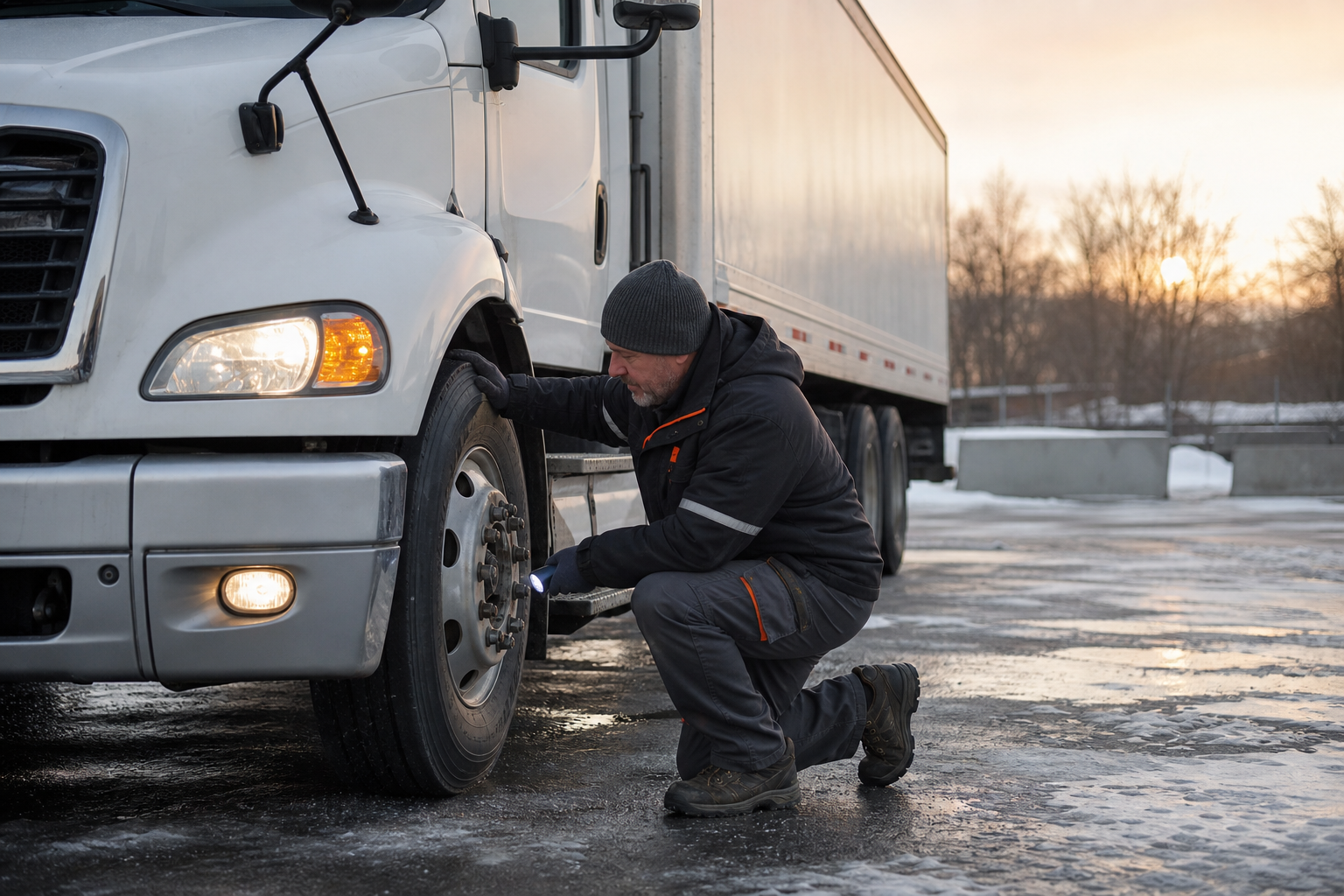
When the check is done, you’ve reduced the chance of a breakdown that could strand you in a snow‑bound yard. Thorough inspections are the first line of defense against winter incidents.
Step 2: Monitor Weather and Know Hazardous Inland Empire Routes
Open a reliable weather app before you leave the yard. Look for alerts about freezing rain, sleet, or wind gusts. Reliable weather services provide free alerts you can set to push to your phone.
Know the trouble spots. The I‑10 corridor, State Route 91, and the mountain passes near Riverside often ice over after a night of sub‑freezing temps. Check local traffic‑camera feeds for real‑time road conditions.
A driver alert system will ping you when a known hazard is reported along your route. Pair that with FMCSA guidance that recommends staying on major highways when possible during severe winter weather.
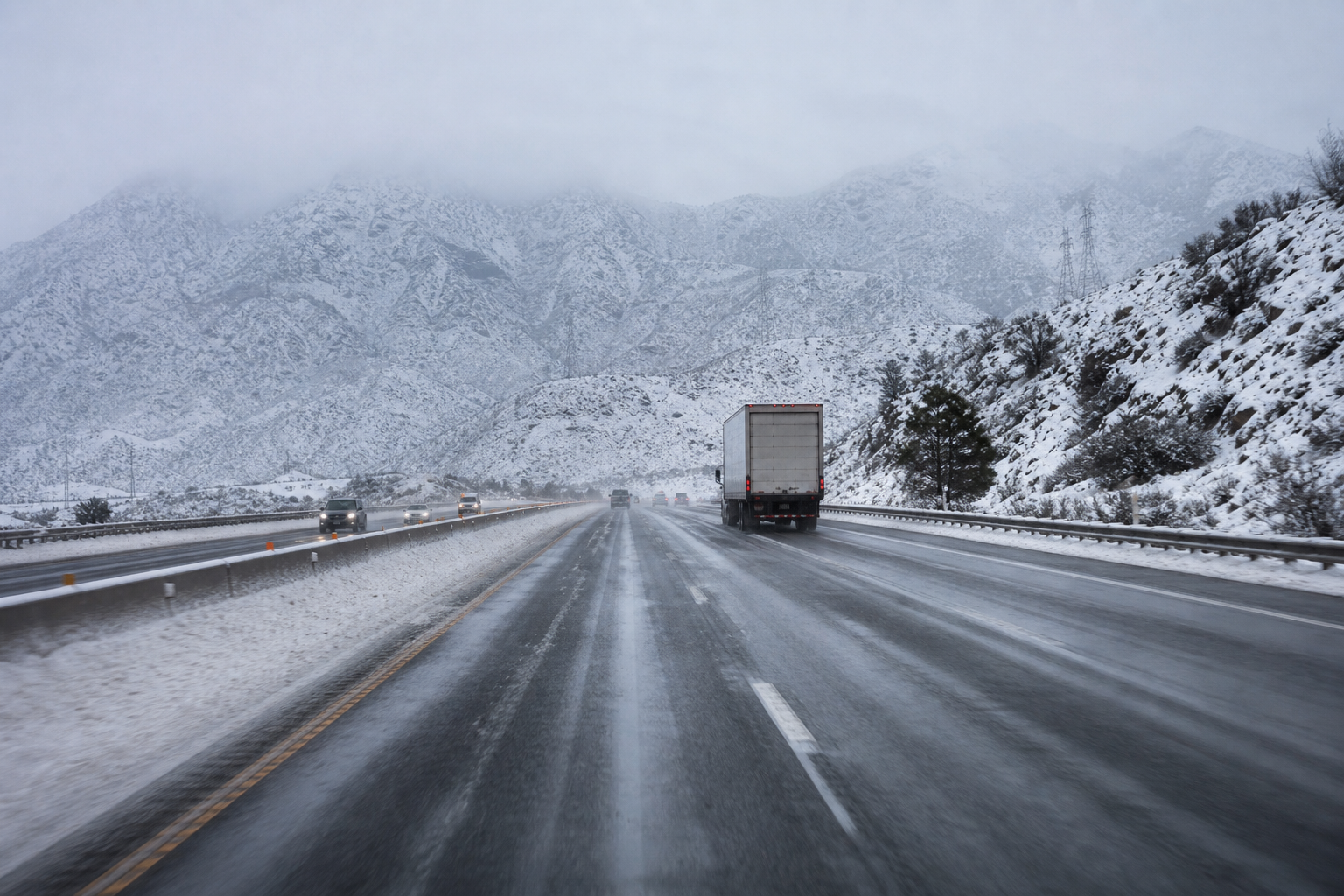
By staying ahead of the storm, you avoid last‑minute lane changes that can lead to collisions. A quick glance at the forecast can save hours of extra mileage.
Step 3: Adjust Speed, Following Distance, and Braking on Slippery Roads
Slow down the moment you see a glaze of ice. Reduce speed by at least one‑third on wet pavement and by half on packed snow. A slower pace gives you more time to react.
Accelerate gently. Sudden throttle can spin the drive wheels, especially on a cold surface. The DMV advises a gradual increase in power to keep traction.
Increase the gap between you and the truck ahead. Wet roads double stopping distance, so give yourself at least twice the normal following distance.
Brake gently. Apply the brakes in a smooth, progressive manner to avoid lock‑up. If you feel the wheels start to skid, ease off the brake and steer in the direction you want to go.
Turn the retarder off before you start braking on a slick stretch. Keeping it on can cause the wheels to skid before you even press the service brakes.
Following these actions lets you stay in control even when the road looks like a skating rink. Speed control is the single biggest factor in preventing winter crashes.
Step 4: Secure Your Load and Pack an Emergency Kit
A shifting load can change your center of gravity and cause a rollover on icy grades. Double‑check all tie‑downs, ratchets, and cargo‑securement devices before you pull out of the dock.
Pack a winter emergency kit. Include blankets, high‑energy snacks, water, a first‑aid kit, a flashlight, and a set of tire chains. These items are essential for any commercial vehicle facing sub‑zero conditions.
Keep a spare battery charger and a portable jump‑starter in the cab. Cold weather saps battery power faster than a hot day.
When the kit is stocked, you’re prepared for a breakdown that could otherwise leave you stranded for hours. An organized kit also speeds up the reporting process to dispatch.
Step 5: Communicate Effectively and Manage Fatigue – Consider Team Driving
Check in with dispatch before you hit the road and after you pass each major weather checkpoint. Let them know your status and any route changes you make.
Fatigue spikes when daylight drops early. Take a short rest at a safe rest area if you feel drowsy. Short, planned breaks beat pushing through on autopilot.
Team driving cuts fatigue in half. While one driver rests, the other stays behind the wheel, keeping the linehaul moving without long idle periods. At CDL Jobs Inland Empire we match drivers with team‑driving schedules that earn extra pay and reduce overtime.
Effective communication also means using your communication system to report icy patches or chain‑up requirements. Quick alerts help other drivers avoid the same spot.
Step 6: Real‑World Scenario – Handling a Winter Storm in Riverside County
Imagine you’re on a 450‑mile haul from Ontario to San Diego on a Tuesday night. A sudden storm drops a half‑inch of snow across Riverside County, and the I‑215 ramp to the 91 becomes slick.
First, you pull up the live cam and see the ramp covered in a thin glaze. You turn the retarder off, drop speed to 30 mph, and increase following distance to 200 feet. Your load is secured, so you feel confident making the climb.
Halfway up, a gust pushes a branch onto the road. You radio dispatch, request a temporary hold, and let the other driver in your team take over while you clear the debris. The rest of the trip proceeds without incident, and you arrive on time because you planned ahead.
This scenario shows how each step, inspection, weather monitoring, speed control, load security, and team communication, works together to keep you safe.
What should I check on my truck before a winter linehaul?
You should inspect tires, brakes, lights, fluid levels, and the retarder. Also verify that the emergency kit is stocked and that the load is properly secured.
How do I know when to turn the retarder off?
Turn the retarder off any time the road is wet, icy, or covered in snow. Keeping it on can cause wheel‑ski and loss of control.
What are the best routes to avoid ice in the Inland Empire?
Major highways like I‑10, I‑15, and State Route 91 are usually cleared first. Mountain passes such as Cajon Pass are higher risk, so check traffic cameras before you commit.
How much extra stopping distance do I need on wet pavement?
Wet roads can double your stopping distance. Increase your following gap to at least twice the normal distance to stay safe.
Can team driving help me stay on schedule in winter?
Yes. Team driving lets one driver rest while the other keeps the rig moving, reducing fatigue and keeping delivery windows intact.
Where can I find a reliable winter emergency kit?
Look for kits that include blankets, non‑perishable snacks, water, a first‑aid pack, a flashlight, and tire chains. Many truck stop stores sell pre‑assembled kits that meet safety recommendations.
Stay safe, keep your rig in top shape, and use the resources at CDL Jobs Inland Empire to find stable FedEx linehaul work that respects your safety and schedule.